Three-Body Gravitational Slingshot Dynamics
Project Narrative
This project explores gravitational slingshot dynamics beyond the classical two-body approximation by modeling hyperbolic flybys in full three-body systems. I developed a unified analytical and numerical framework to quantify energy ceilings in close-in gravitational slingshots, combining closed-form hyperbolic scattering theory with large-scale three-body Monte Carlo simulation in a hot Jupiter system. Starting from first principles, together with my PI, Dr. David Kipping, we derived strict two-body kinematic limits and geometric vector plateaus, then I built a high-fidelity integrator to test how real trajectories behave in a deep stellar potential.
The results show that while no trajectory exceeds the stellar two-body energy ceiling, three-body dynamics can amplify energy gains far beyond classical planet-only bounds through structured angular momentum exchange consistent with conservation of the Jacobi constant. This project demonstrates rigorous theoretical derivation, invariant-based diagnostics, and large-scale numerical validation to uncover efficiency frontiers in multi-body orbital systems.
Analytical Foundations
Hyperbolic Scattering and Energy Ceilings
At the core of the project is a closed-form solution to two-body hyperbolic scattering. In the rest frame of a gravitating body, the asymptotic velocity magnitude is conserved:
The encounter only rotates the velocity vector by a deflection angle
where is the standard gravitational parameter and is the impact parameter.
Transforming back to the inertial frame yields a strict kinematic ceiling for an unpowered gravity assist:
This is the true kinematic ceiling and establishes the fundamental single-encounter speed gain limit, independent of numerical simulation.
At the core of the project is a closed-form solution to two-body hyperbolic scattering. In the rest frame of a gravitating body, the asymptotic velocity magnitude is conserved:
The encounter only rotates the velocity vector by a deflection angle
where is the standard gravitational parameter and is the impact parameter.
Transforming back to the inertial frame yields a strict kinematic ceiling for an unpowered gravity assist:
This is the true kinematic ceiling and establishes the fundamental single-encounter speed gain limit, independent of numerical simulation.
Numerical Engine
Large-Scale Three-Body Monte Carlo Simulation
To explore behavior beyond idealized two-body theory, I built a high-fidelity three-body integrator modeling a star and planet-particle system. Over 24,000 trajectories were simulated using adaptive integration, randomized initial conditions, and strict physical filtering (unbound states, stellar clearance constraints, planetary encounter thresholds).
For each trajectory, I tracked:
- Star-centric specific orbital energy
- Planet-relative hyperbolic excess velocity
- Angular momentum evolution
- Velocity vector change magnitude
To explore behavior beyond idealized two-body theory, I built a high-fidelity three-body integrator modeling a star and planet-particle system. Over 24,000 trajectories were simulated using adaptive integration, randomized initial conditions, and strict physical filtering (unbound states, stellar clearance constraints, planetary encounter thresholds).
For each trajectory, I tracked:
- Star-centric specific orbital energy
- Planet-relative hyperbolic excess velocity
- Angular momentum evolution
- Velocity vector change magnitude
Energy Efficiency Frontiers
Scalar Speed vs. Vector Rotation Limits
Two distinct ceilings emerge:
Scalar speed gain ceiling
Vector change plateau
The first represents a physically meaningful energy frontier. The second reflects a purely geometric upper bound in Euclidean velocity space.
In close-in hot Jupiter systems, trajectories frequently approach the scalar ceiling and cluster near vector-efficiency plateaus, revealing near-optimal angular deflection geometries.
Two distinct ceilings emerge:
Scalar speed gain ceiling
Vector change plateau
The first represents a physically meaningful energy frontier. The second reflects a purely geometric upper bound in Euclidean velocity space.
In close-in hot Jupiter systems, trajectories frequently approach the scalar ceiling and cluster near vector-efficiency plateaus, revealing near-optimal angular deflection geometries.
Breaking the Planet-Only Ceiling
Three-Body Amplification in a Deep Stellar Potential
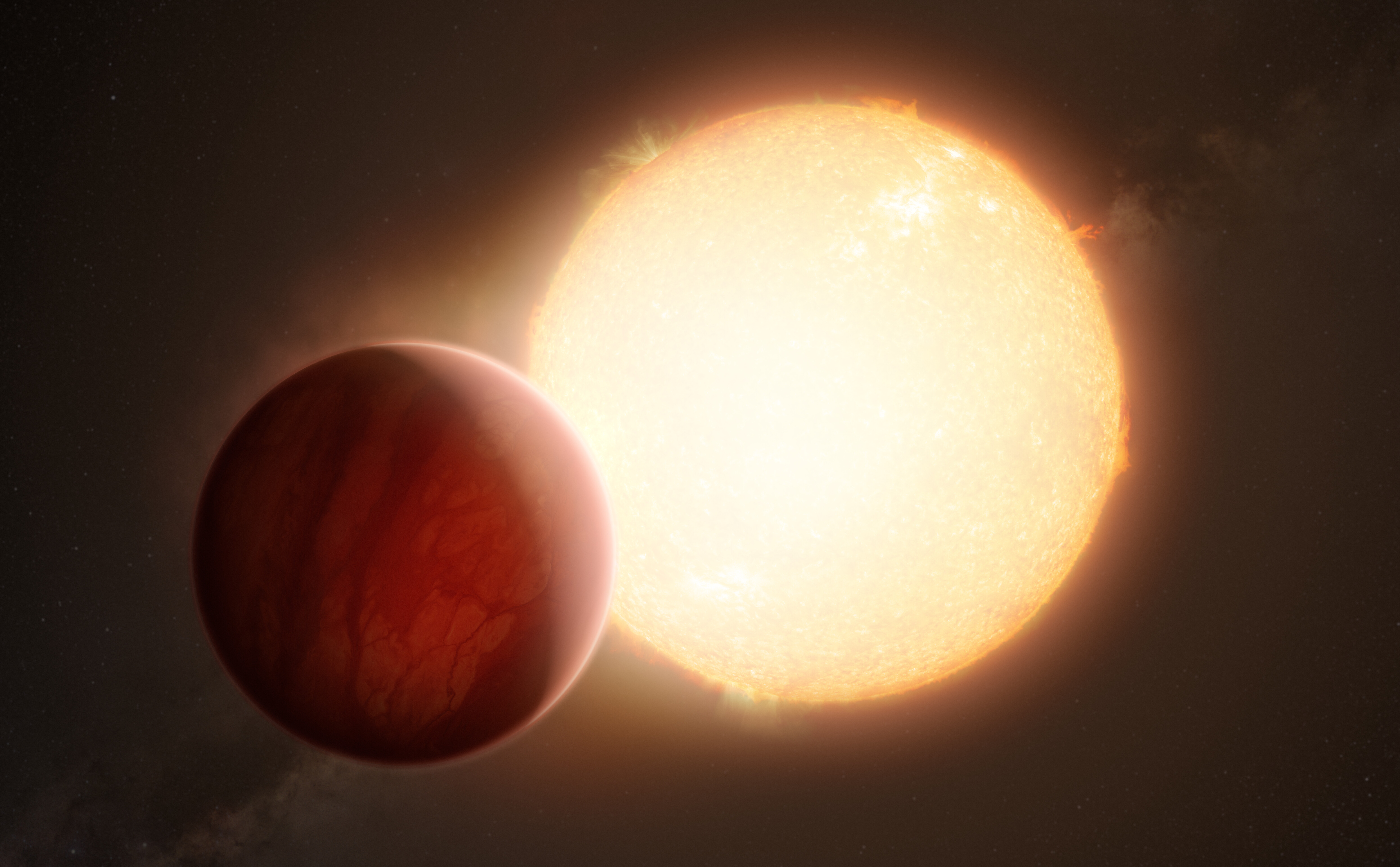
Classical gravity assist analysis assumes the planet dominates locally. In a close-in system, this assumption fails: the stellar potential remains strong throughout the encounter.
Simulations demonstrate that three-body trajectories exceed the planet-only two-body energy ceiling by over two orders of magnitude, yet remain strictly below the stellar two-body bound.
The planet does not supply energy directly; rather, it acts as a geometric lever that redirects trajectories inside a deep stellar potential well, unlocking kinetic energy otherwise inaccessible in a purely two-body framework.
Invariant Diagnostics
Energy & Angular Momentum Coupling via Jacobi Constant
To confirm physical consistency, results were analyzed in the framework of the Circular Restricted Three-Body Problem (CR3BP), where the conserved quantity is the Jacobi constant:
In dimensional form, inertial energy changes are coupled to angular momentum exchange:
Monte Carlo results exhibit this correlation explicitly: large energy boosts correspond to large changes in angular momentum delivered by planetary torque.
This confirms that observed amplification arises from structured three-body dynamics rather than numerical artifacts.
Related Writings
Gravitational Slingshot Dynamics in Three-Body Systems